
The Story
Scientific Name
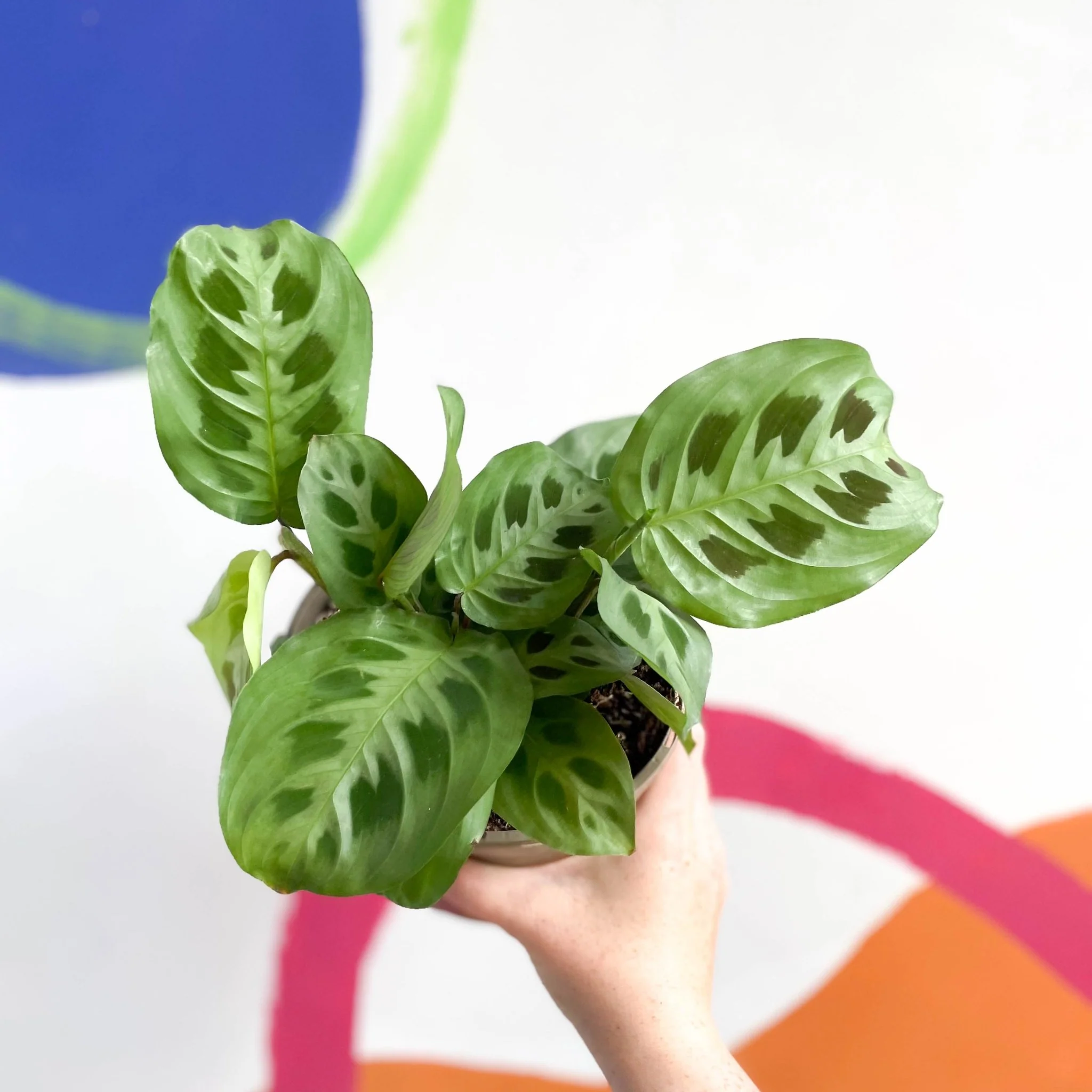
Maranta leuconeura
Common Name
Prayer Plant
Origin
Native to tropical Brazilian forests
Light
Bright, indirect light throughout spring and summer; it will appreciate a splash of morning or evening sun in autumn and winter. If it isn't moving its leaves up and down often this probably means it's a bit too shaded.
Water
Allow the top quarter of the soil to dry out between waters; make sure to keep an eye on this, especially in brighter spots where the soil will dry out quicker.
Humidity
Likes high humidity, so will benefit from the introduction of a humidity tray and regular misting. Hose down the plant to keep it dust-free and keep an eye out for curling, browning leaves indicating low humidity.
Soil
Use a well-aerated soil mix which also retails moisture well to keep this plant happy; a mix of light components such as coir with moisture-retentive vermiculite or zeolite works well. Repot every two years in spring as the plant grows.
Food
Feed every four waters in the growing season, and reduce to every six in autumn and winter.
Temperature
Ideal temperature is 18-27°C; make sure it does not get colder than 15°C in winter.
Pet-safe
Yes, but too much nibbling won't be good for pets, small humans or the plant!
Sprouts Top Tips
Keep an eye on your Maranta's leaves for an indication of its health; yellow leaves signify overwatering and soggy soil whilst brown, crispy leaves indicate too little humidity.

Details & Craftsmanship
Every detail has been carefully considered to bring you the perfect product.
Details & Craftsmanship
Every detail has been carefully considered to bring you the perfect product.

Details & Craftsmanship
Every detail has been carefully considered to bring you the perfect product.

Details & Craftsmanship
Every detail has been carefully considered to bring you the perfect product.
Description
Scientific Name
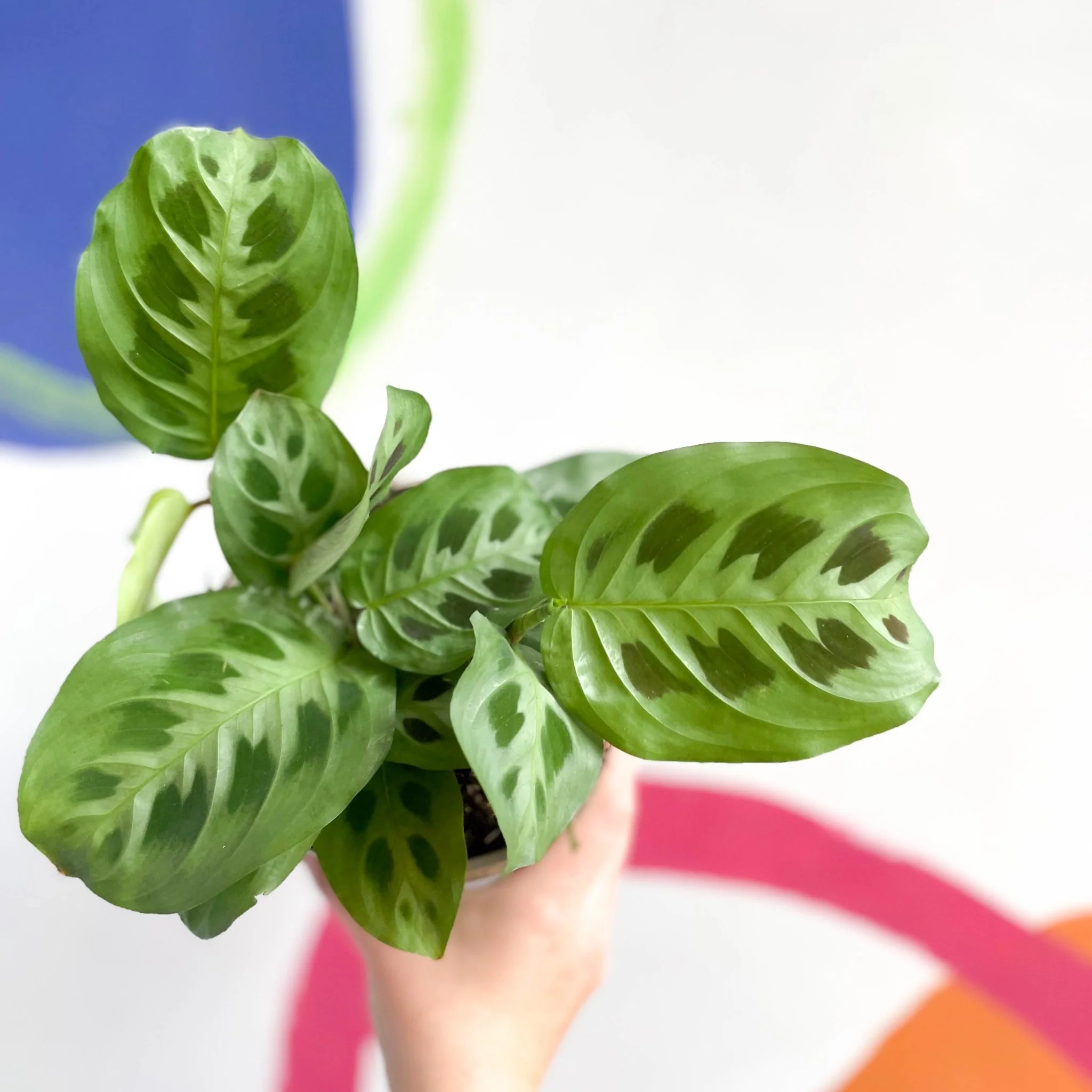
Maranta leuconeura
Common Name
Prayer Plant
Origin
Native to tropical Brazilian forests
Light
Bright, indirect light throughout spring and summer; it will appreciate a splash of morning or evening sun in autumn and winter. If it isn't moving its leaves up and down often this probably means it's a bit too shaded.
Water
Allow the top quarter of the soil to dry out between waters; make sure to keep an eye on this, especially in brighter spots where the soil will dry out quicker.
Humidity
Likes high humidity, so will benefit from the introduction of a humidity tray and regular misting. Hose down the plant to keep it dust-free and keep an eye out for curling, browning leaves indicating low humidity.
Soil
Use a well-aerated soil mix which also retails moisture well to keep this plant happy; a mix of light components such as coir with moisture-retentive vermiculite or zeolite works well. Repot every two years in spring as the plant grows.
Food
Feed every four waters in the growing season, and reduce to every six in autumn and winter.
Temperature
Ideal temperature is 18-27°C; make sure it does not get colder than 15°C in winter.
Pet-safe
Yes, but too much nibbling won't be good for pets, small humans or the plant!
Sprouts Top Tips
Keep an eye on your Maranta's leaves for an indication of its health; yellow leaves signify overwatering and soggy soil whilst brown, crispy leaves indicate too little humidity.