Original: $24.60
-65%$24.60
$8.61The Story
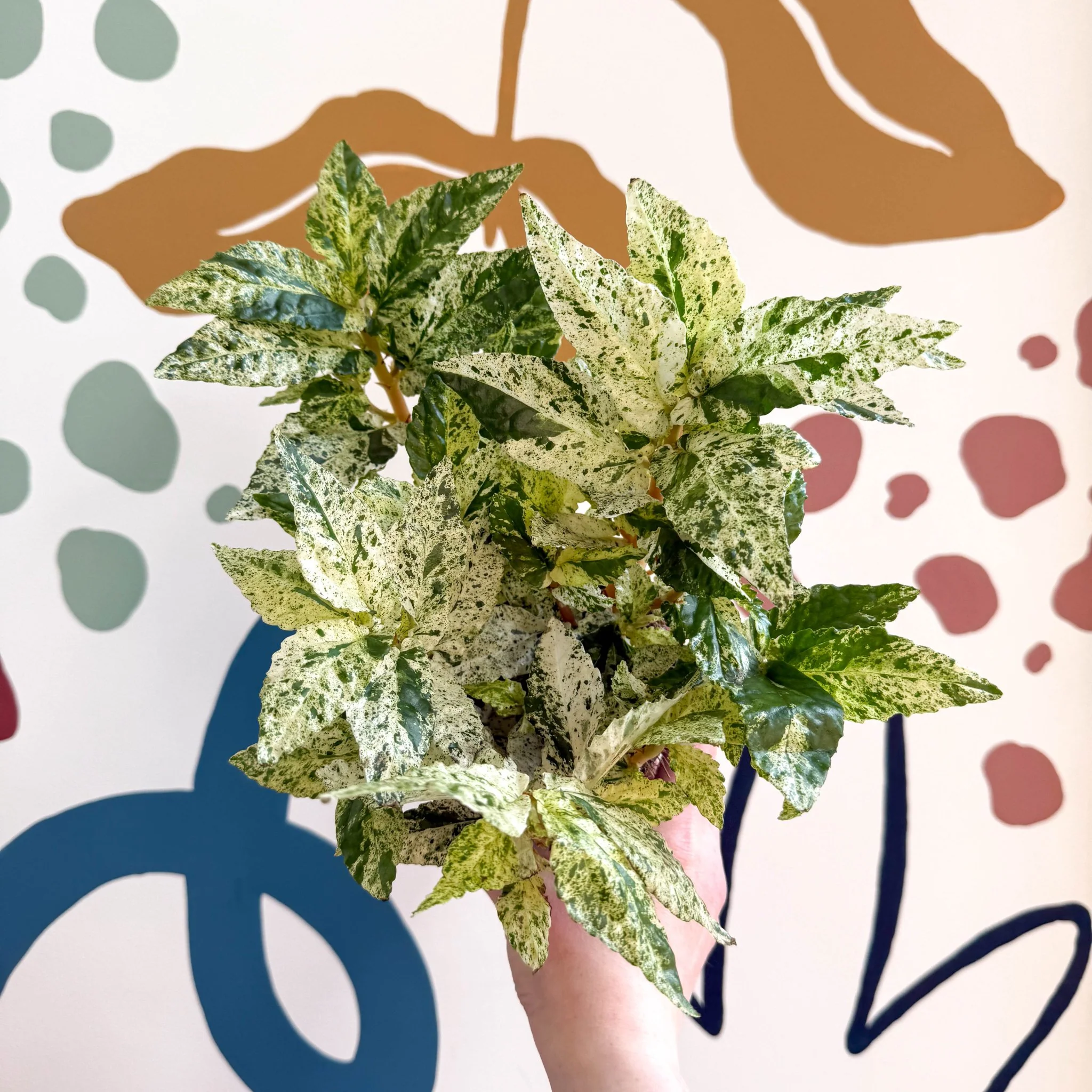
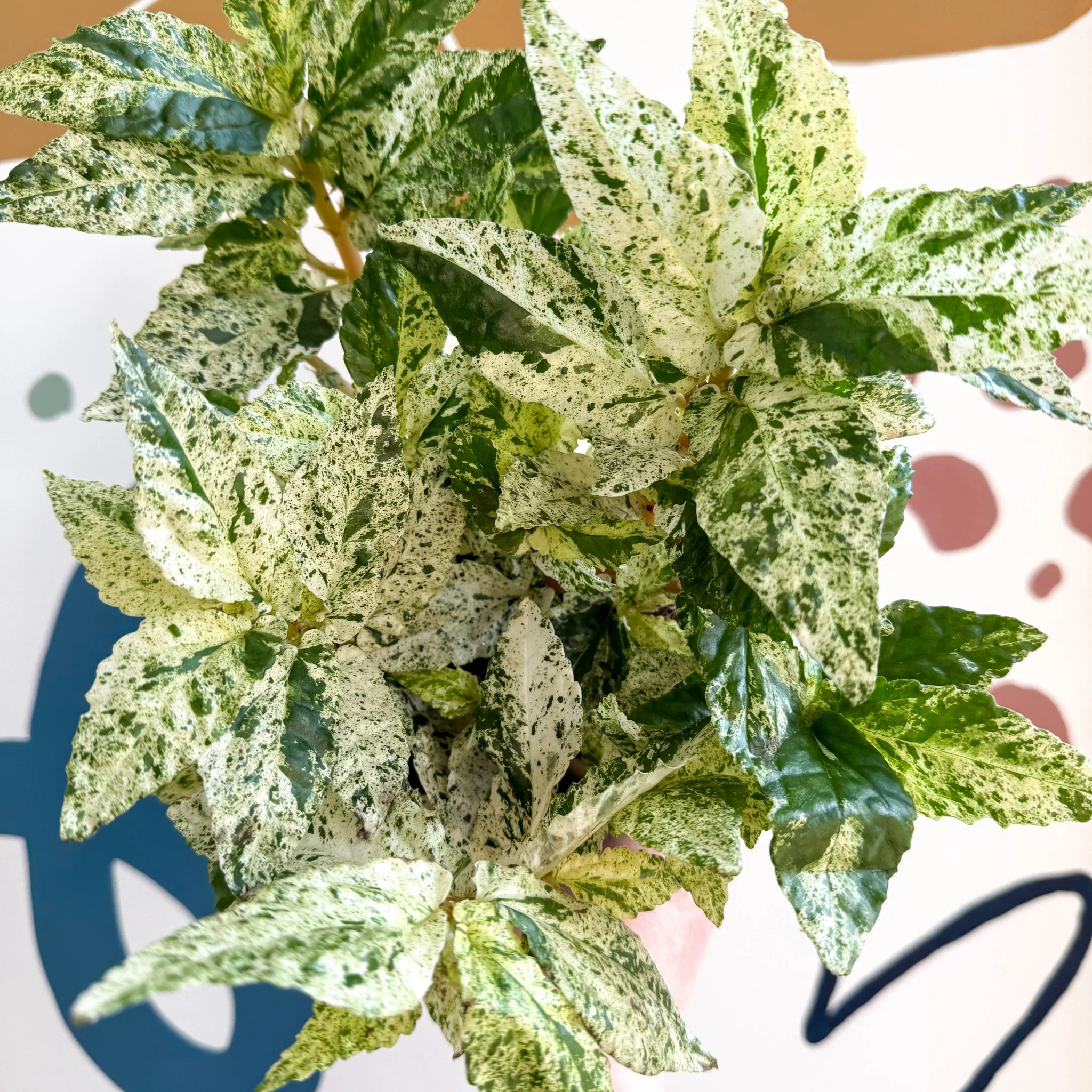
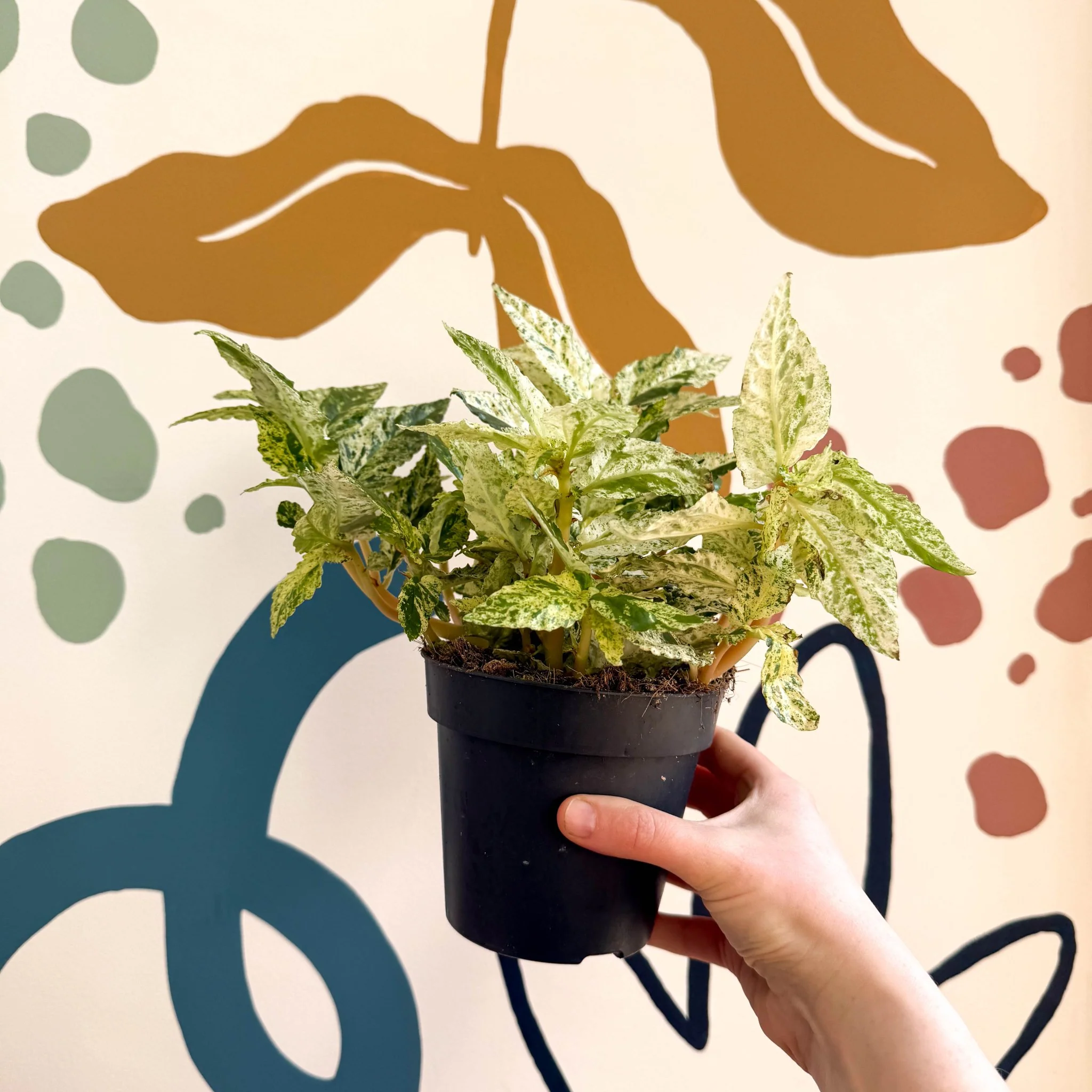
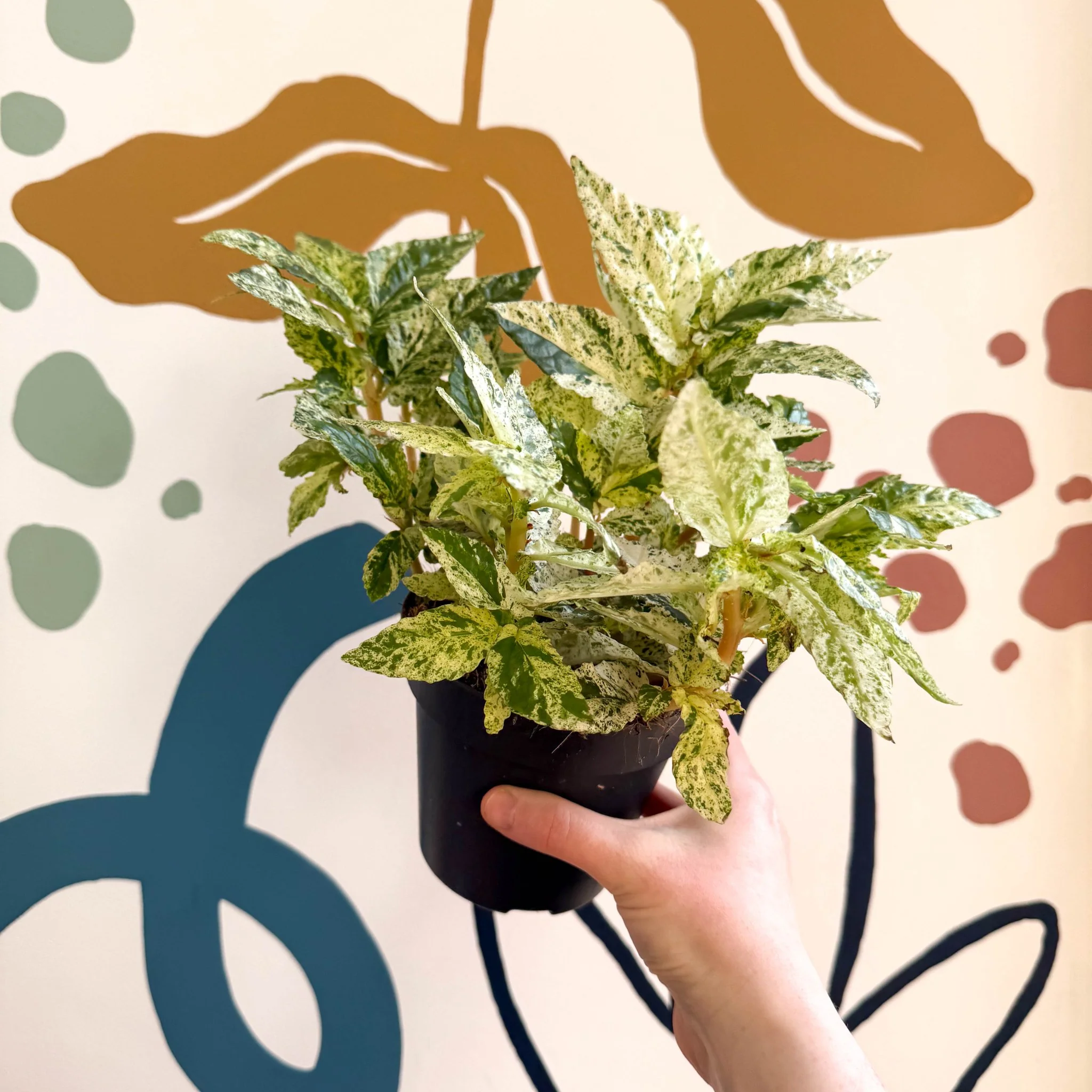
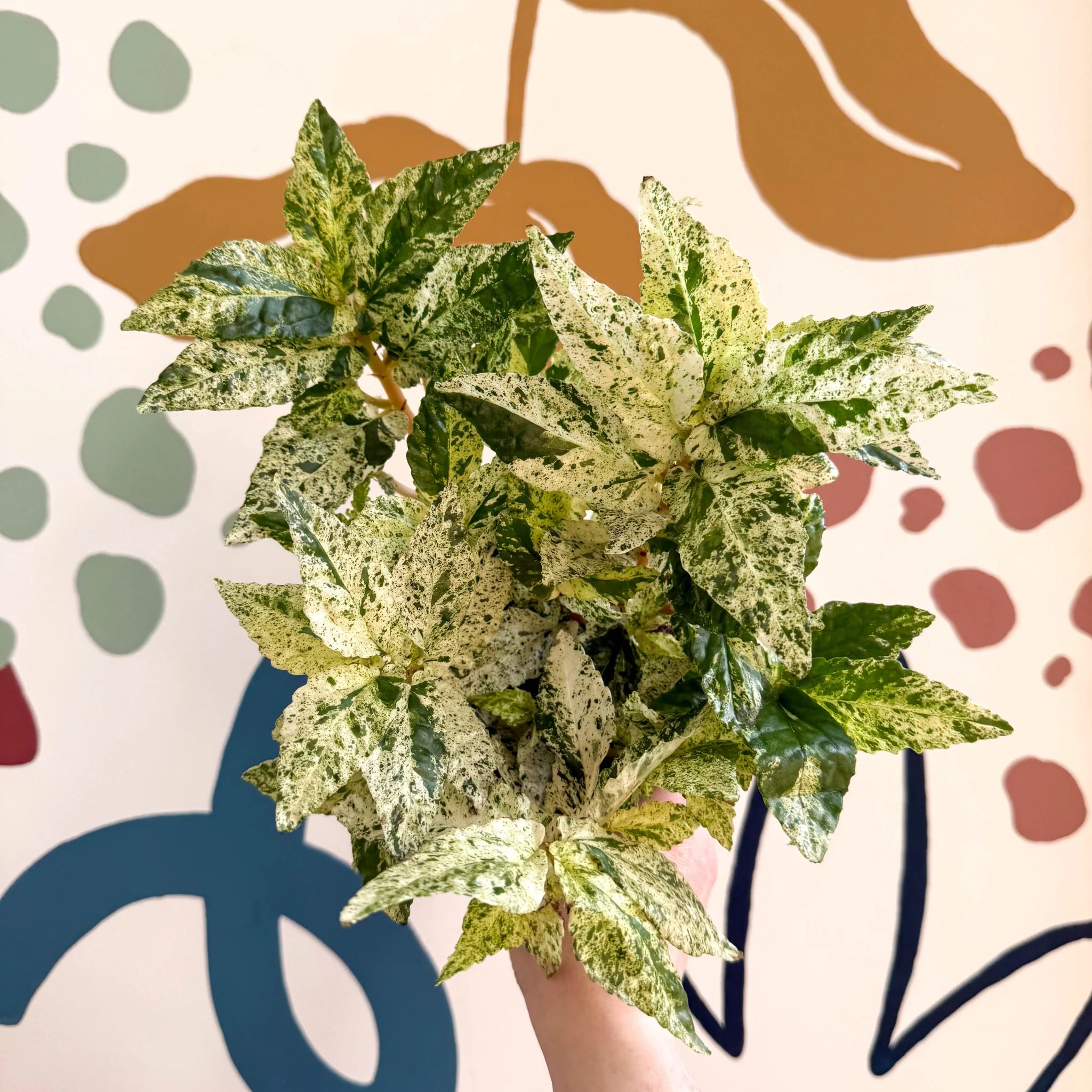
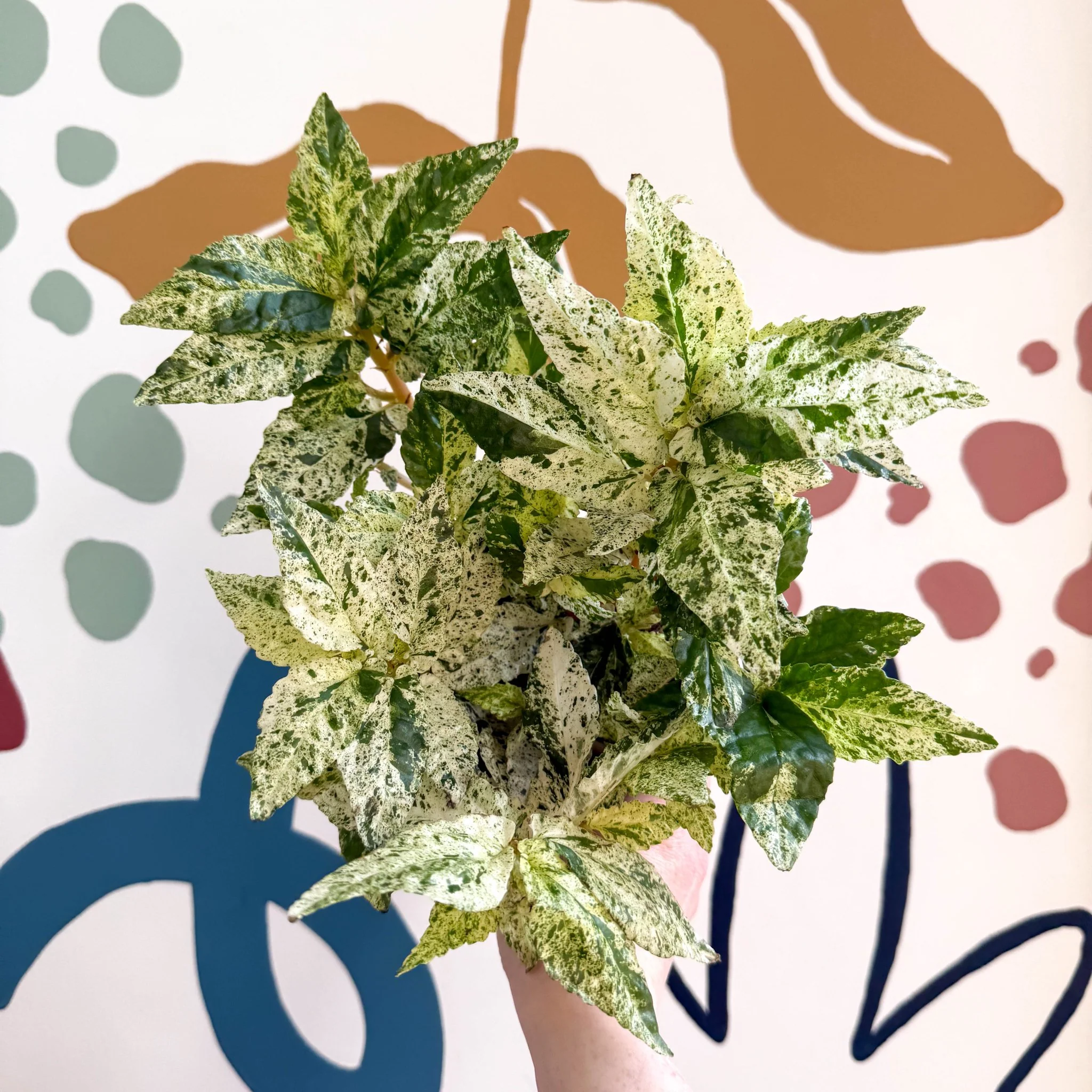
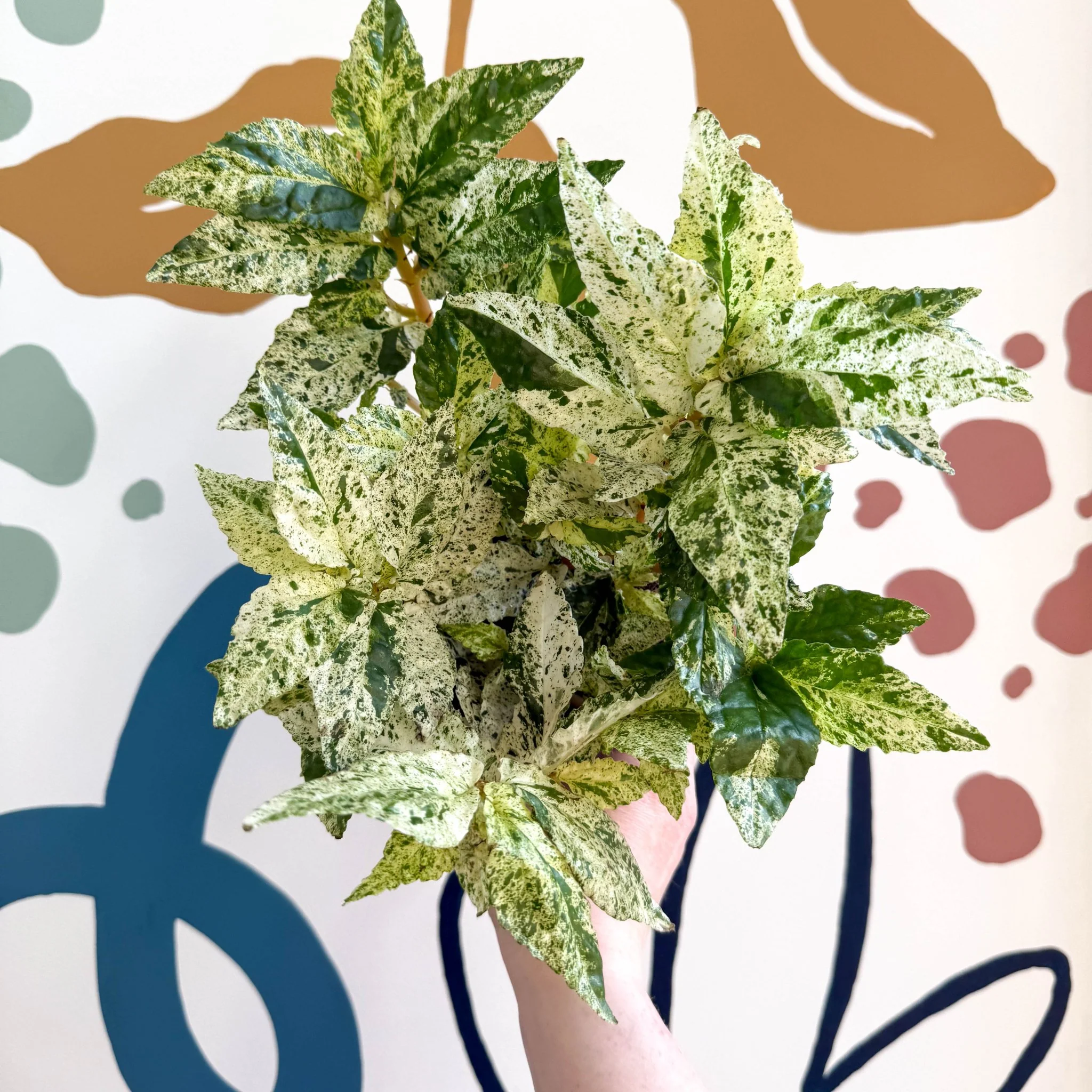
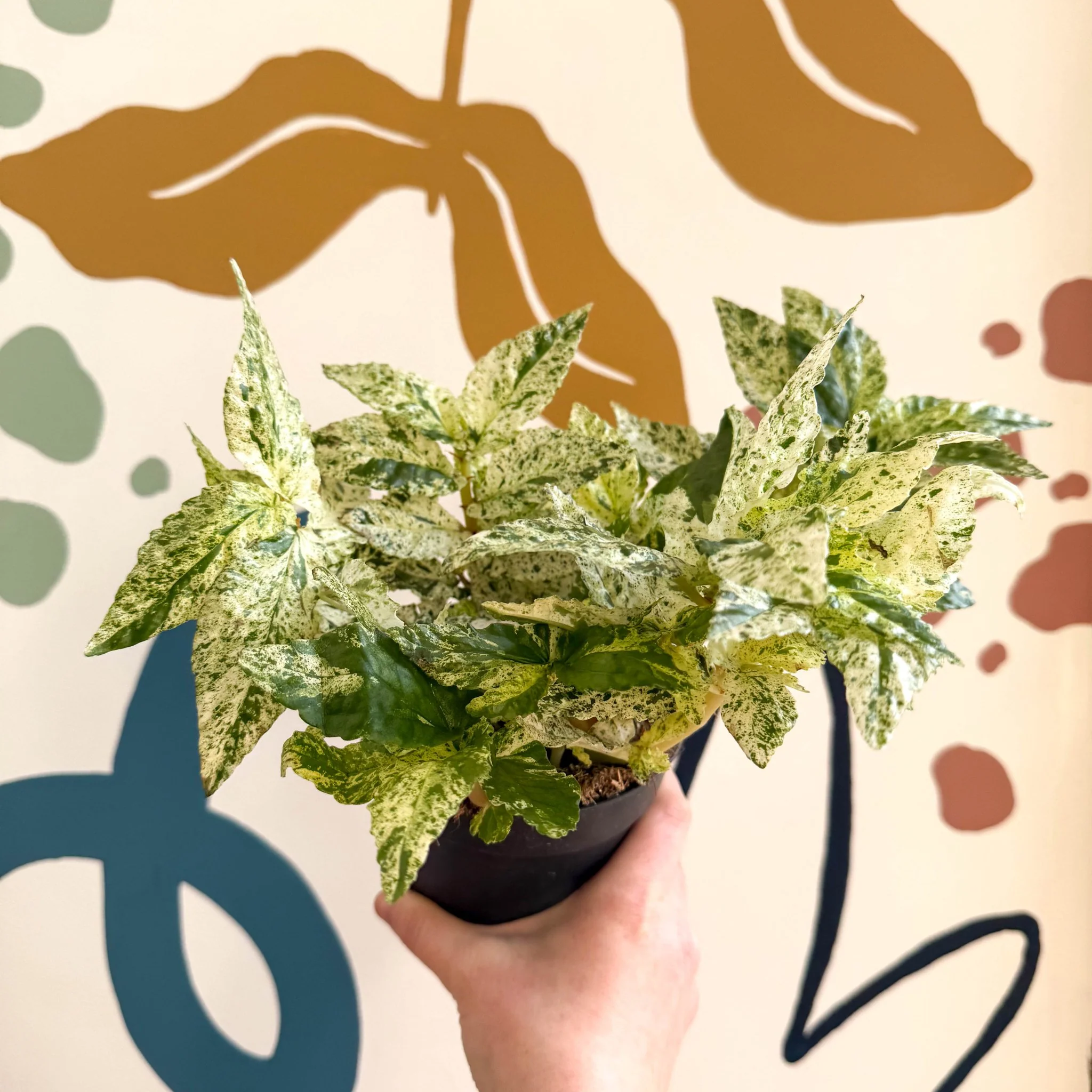
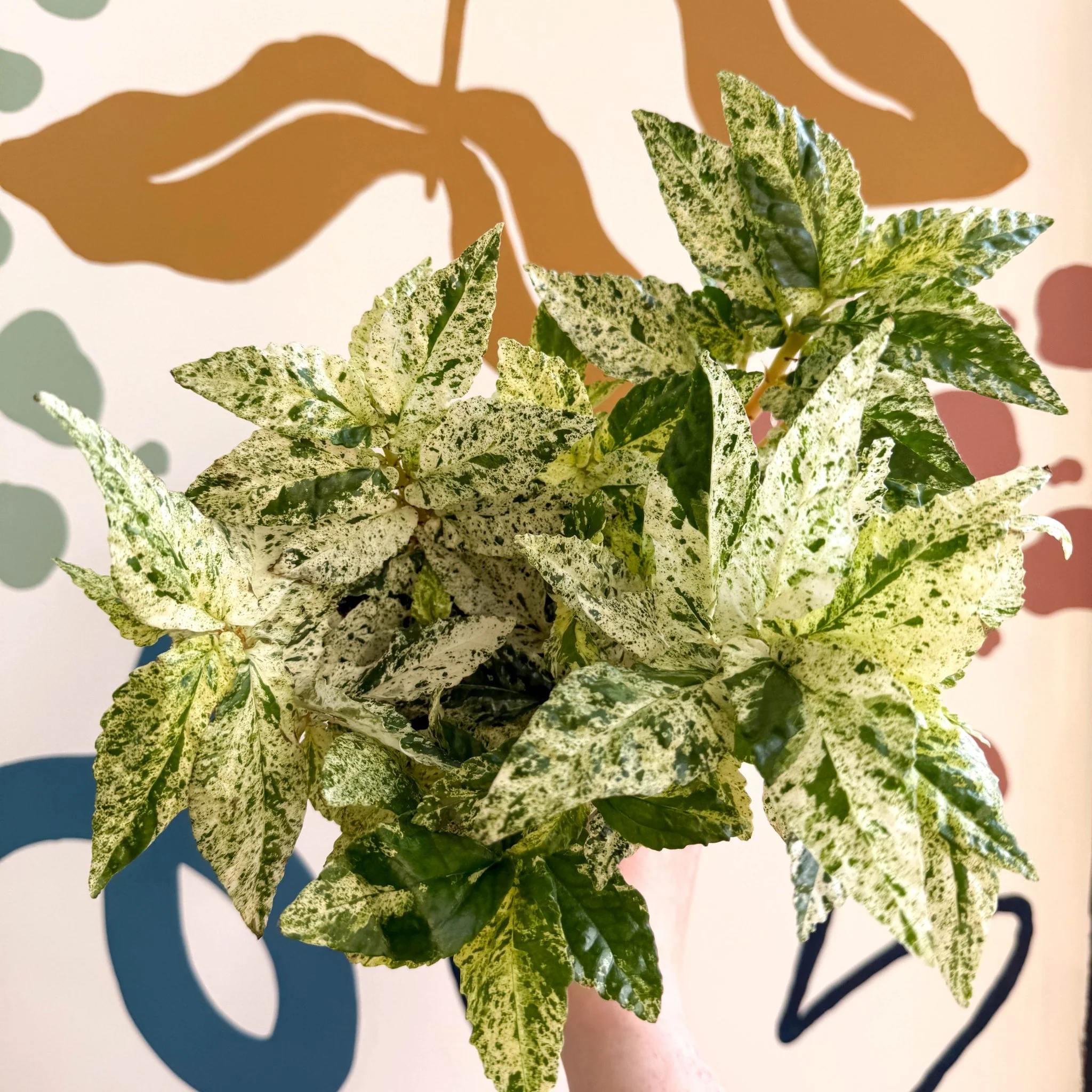
This beautiful, green-and-white variegated plant is, in fact, not a Begonia - but the care is quite similar, so it's a useful name to some extent. The long, elegant leaves are a deep forest green speckled and washed all over with cream-white variegation. The high level of variegation means they do need plenty of light to keep sustaining the patterns, but it's worth the extra care to help this beautiful plant thrive. It's fairly easygoing, too; if you can keep it in above-average humidity and with damp soil, it will be satisfied and keep showing you those gorgeous leaves.
Scientific Name
Procris repens ‘Variegata' (creeping morning dew plant, cultivar: variegated)
Synonyms: Pellionia repens ‘Variegata’, Elatostema repens, Polychroa repens, Begonia daveauana
This plant has had a few different scientific names; initially, it was known as Polychroa repens, when described in 1790, and has been given several other names since then. It was known until recently as Pellionia repens, a classification given in a 1928 paper, before being renamed in 2011 to the current accepted name: Procris repens.
Common Name
Watermelon Begonia, Wavy Watermelon Begonia, Satin Pellionia, Rainbow Vine, Trailing Watermelon Begonia, Polynesian Ivy
Origin
An Asian native, this plant is found in wet tropical areas in Bangladesh, Cambodia, Southern China, India, Laos, Malaysia, Myanmar, Philippines, Thailand and Vietnam
Light
Bright but indirect light is your best bet; your Watermelon Begonia can cope with some direct sun, but more than an hour of it will scorch the leaves. If new leaves are growing with less of that gorgeous variegation, it may not be getting enough light.
Water
Just let the top third of the soil dry between waters, and remember to water less in winter. This plant doesn't cope well with drying out, so don't leave it forgotten.
Humidity
Above-average humidity is very helpful when caring for this plant - a kitchen or well-lit bathroom could work well. Make sure it's out of draughts, away from operating radiators and potentially situated in a pebble tray in drier homes.
Soil
Use a moisture-retentive potting mix; one designed for Calatheas or Syngoniums may be a good choice here. Coir to retain moisture with added perlite to promote drainage is a good combination. Repot every three years in spring as the plant grows; this plant is fine rootbound for a while, and can suffer when moved, so it's best to wait until it absolutely needs to move.
Food
Feed every four waters in the growing season, reduce to every six in autumn and winter. Pre-water the soil before applying 'ready to use' products to protect the roots.
Temperature
Grows well in temperatures between 15-30°C; make sure it does not get colder than 12°C in winter.
Pet-safe
Yes, but too much nibbling won't be good for pets, small humans or the plant!
Sprouts Top Tips
This plant can be thirsty, but take care when you water not to let excess water sit in the foliage. This can cause issues indoors, where it won't dry as quickly, especially with how dense the foliage is. It's best to water straight into the soil or have this plant draw up its water by sitting it in a tray of water for half an hour.
Details & Craftsmanship
Every detail has been carefully considered to bring you the perfect product.
Details & Craftsmanship
Every detail has been carefully considered to bring you the perfect product.
Details & Craftsmanship
Every detail has been carefully considered to bring you the perfect product.
Details & Craftsmanship
Every detail has been carefully considered to bring you the perfect product.
Details & Craftsmanship
Every detail has been carefully considered to bring you the perfect product.
Details & Craftsmanship
Every detail has been carefully considered to bring you the perfect product.
Details & Craftsmanship
Every detail has been carefully considered to bring you the perfect product.
Details & Craftsmanship
Every detail has been carefully considered to bring you the perfect product.

Details & Craftsmanship
Every detail has been carefully considered to bring you the perfect product.
Description
This beautiful, green-and-white variegated plant is, in fact, not a Begonia - but the care is quite similar, so it's a useful name to some extent. The long, elegant leaves are a deep forest green speckled and washed all over with cream-white variegation. The high level of variegation means they do need plenty of light to keep sustaining the patterns, but it's worth the extra care to help this beautiful plant thrive. It's fairly easygoing, too; if you can keep it in above-average humidity and with damp soil, it will be satisfied and keep showing you those gorgeous leaves.
Scientific Name
Procris repens ‘Variegata' (creeping morning dew plant, cultivar: variegated)
Synonyms: Pellionia repens ‘Variegata’, Elatostema repens, Polychroa repens, Begonia daveauana
This plant has had a few different scientific names; initially, it was known as Polychroa repens, when described in 1790, and has been given several other names since then. It was known until recently as Pellionia repens, a classification given in a 1928 paper, before being renamed in 2011 to the current accepted name: Procris repens.
Common Name
Watermelon Begonia, Wavy Watermelon Begonia, Satin Pellionia, Rainbow Vine, Trailing Watermelon Begonia, Polynesian Ivy
Origin
An Asian native, this plant is found in wet tropical areas in Bangladesh, Cambodia, Southern China, India, Laos, Malaysia, Myanmar, Philippines, Thailand and Vietnam
Light
Bright but indirect light is your best bet; your Watermelon Begonia can cope with some direct sun, but more than an hour of it will scorch the leaves. If new leaves are growing with less of that gorgeous variegation, it may not be getting enough light.
Water
Just let the top third of the soil dry between waters, and remember to water less in winter. This plant doesn't cope well with drying out, so don't leave it forgotten.
Humidity
Above-average humidity is very helpful when caring for this plant - a kitchen or well-lit bathroom could work well. Make sure it's out of draughts, away from operating radiators and potentially situated in a pebble tray in drier homes.
Soil
Use a moisture-retentive potting mix; one designed for Calatheas or Syngoniums may be a good choice here. Coir to retain moisture with added perlite to promote drainage is a good combination. Repot every three years in spring as the plant grows; this plant is fine rootbound for a while, and can suffer when moved, so it's best to wait until it absolutely needs to move.
Food
Feed every four waters in the growing season, reduce to every six in autumn and winter. Pre-water the soil before applying 'ready to use' products to protect the roots.
Temperature
Grows well in temperatures between 15-30°C; make sure it does not get colder than 12°C in winter.
Pet-safe
Yes, but too much nibbling won't be good for pets, small humans or the plant!
Sprouts Top Tips
This plant can be thirsty, but take care when you water not to let excess water sit in the foliage. This can cause issues indoors, where it won't dry as quickly, especially with how dense the foliage is. It's best to water straight into the soil or have this plant draw up its water by sitting it in a tray of water for half an hour.