
Original: $61.50
-65%$61.50
$21.52The Story
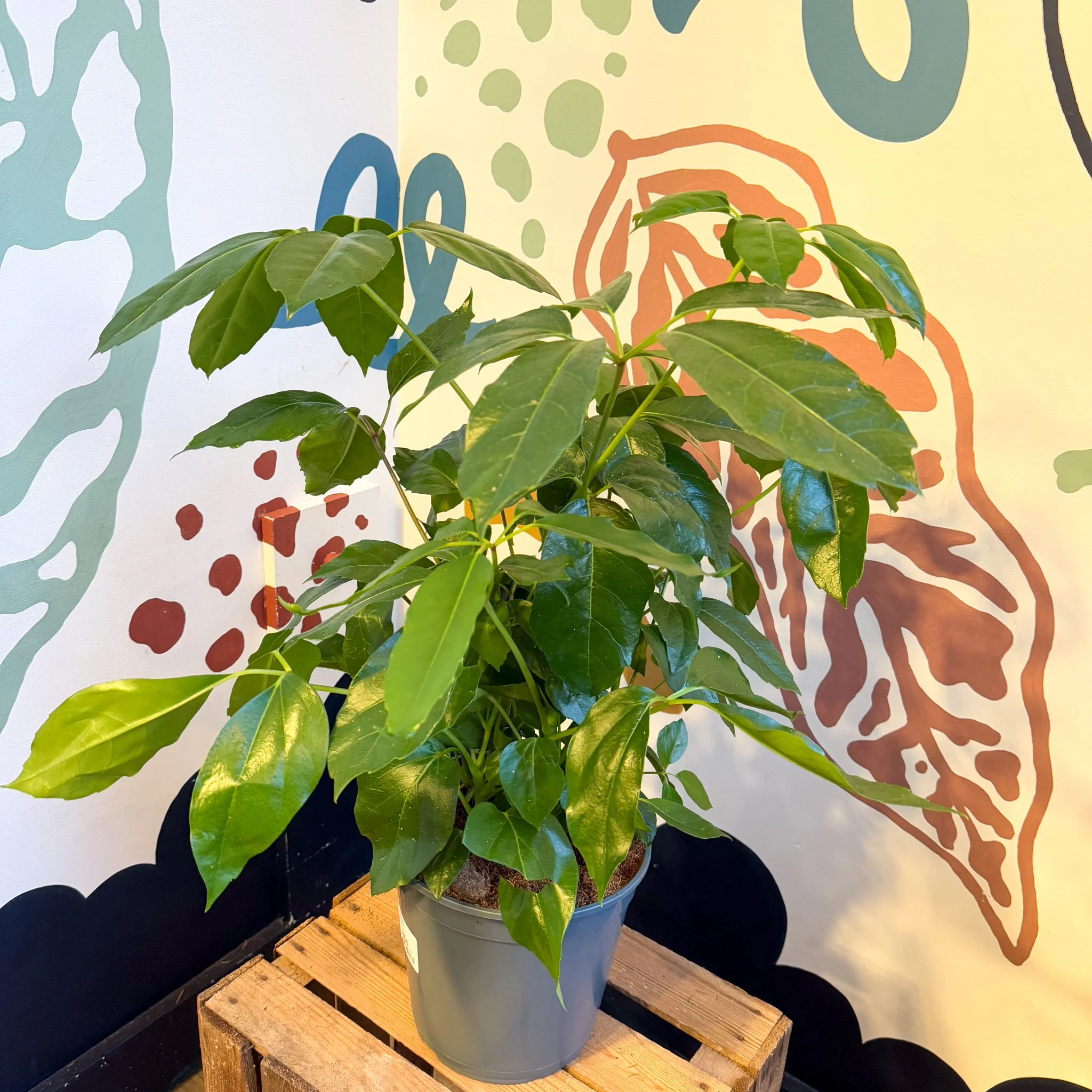
This Palm has gorgeous leaves extending fronds outwards from each stem, catching the eye with the circular patterns of the leaves. Its stems, however, are also something to look out for; lined with rows of spikes, you'll want to be careful moving these plants! This sort of adaptation can discourage hungry herbivores from munching on these plants in the wild, but in your home can add an extra interest to the decor! Fortunately, the palms do not need too much close care; their soil should be at least a third dry before you water again, and as long as they're somewhere fairly bright with average to high humidity, they'll be happy for you to otherwise admire from a distance.
Scientific Name
Saribus rotundifolius (Sariboe plant with rounded leaves)
Reclassified from the Livistona genus in 2011 after DNA analysis, the correct scientific name is Saribus rotundifolius. Has also been known as Livistona rotundifolia, Corypha rotundifolia and Livistona chinensis
Common Name
Footstool Palm, Java Palm, Sadeng, Serdang, Fan Palm, Anahaw Palm
Origin
Native to Southeast Asia
Light
Bright, indirect light is best, and this plant will also appreciate a splash of direct sun in winter to help it through its dormancy period. This plant can cope with lower light levels, but prefers some light!
Water
In brighter locations, allow the top third of the soil to dry out between waters; in darker locations make sure half the soil has dried before watering again.
Humidity
This plant loves humidity and will benefit from a pebble tray or a regular mist. Make sure it's nowhere near an operating radiator. If you see browning leaf tips, it's probably not humid enough; keep an eye out in winter especially.
Soil
Use a well-draining soil. A mix with added coir or sand would do well; this plant does not like to sit soggy. Repot every two years in Spring; take care with your plant as it can suffer from transplant shock when repotted.
Food
Feed every four waters in the growing season, reduce to every six in autumn and winter.
Temperature
Temperatures of about 18-30°C are great- make sure it doesn't drop below 12°C in winter.
Pet-safe
Yes, but too much nibbling won't be good for pets, small humans or the plant!
Sprouts Top Tips
Older leaves will go yellow and die back over time; however if you notice this happening rapidly, you may be over-watering your plant. Make sure you're allowing the top third to a half of the soil to dry out between waters!

Details & Craftsmanship
Every detail has been carefully considered to bring you the perfect product.

Details & Craftsmanship
Every detail has been carefully considered to bring you the perfect product.

Details & Craftsmanship
Every detail has been carefully considered to bring you the perfect product.

Details & Craftsmanship
Every detail has been carefully considered to bring you the perfect product.

Details & Craftsmanship
Every detail has been carefully considered to bring you the perfect product.

Details & Craftsmanship
Every detail has been carefully considered to bring you the perfect product.

Details & Craftsmanship
Every detail has been carefully considered to bring you the perfect product.

Details & Craftsmanship
Every detail has been carefully considered to bring you the perfect product.

Details & Craftsmanship
Every detail has been carefully considered to bring you the perfect product.

Details & Craftsmanship
Every detail has been carefully considered to bring you the perfect product.

Details & Craftsmanship
Every detail has been carefully considered to bring you the perfect product.

Details & Craftsmanship
Every detail has been carefully considered to bring you the perfect product.

Details & Craftsmanship
Every detail has been carefully considered to bring you the perfect product.

Details & Craftsmanship
Every detail has been carefully considered to bring you the perfect product.

Details & Craftsmanship
Every detail has been carefully considered to bring you the perfect product.

Details & Craftsmanship
Every detail has been carefully considered to bring you the perfect product.

Details & Craftsmanship
Every detail has been carefully considered to bring you the perfect product.

Details & Craftsmanship
Every detail has been carefully considered to bring you the perfect product.

Details & Craftsmanship
Every detail has been carefully considered to bring you the perfect product.

Details & Craftsmanship
Every detail has been carefully considered to bring you the perfect product.
Description
This Palm has gorgeous leaves extending fronds outwards from each stem, catching the eye with the circular patterns of the leaves. Its stems, however, are also something to look out for; lined with rows of spikes, you'll want to be careful moving these plants! This sort of adaptation can discourage hungry herbivores from munching on these plants in the wild, but in your home can add an extra interest to the decor! Fortunately, the palms do not need too much close care; their soil should be at least a third dry before you water again, and as long as they're somewhere fairly bright with average to high humidity, they'll be happy for you to otherwise admire from a distance.
Scientific Name
Saribus rotundifolius (Sariboe plant with rounded leaves)
Reclassified from the Livistona genus in 2011 after DNA analysis, the correct scientific name is Saribus rotundifolius. Has also been known as Livistona rotundifolia, Corypha rotundifolia and Livistona chinensis
Common Name
Footstool Palm, Java Palm, Sadeng, Serdang, Fan Palm, Anahaw Palm
Origin
Native to Southeast Asia
Light
Bright, indirect light is best, and this plant will also appreciate a splash of direct sun in winter to help it through its dormancy period. This plant can cope with lower light levels, but prefers some light!
Water
In brighter locations, allow the top third of the soil to dry out between waters; in darker locations make sure half the soil has dried before watering again.
Humidity
This plant loves humidity and will benefit from a pebble tray or a regular mist. Make sure it's nowhere near an operating radiator. If you see browning leaf tips, it's probably not humid enough; keep an eye out in winter especially.
Soil
Use a well-draining soil. A mix with added coir or sand would do well; this plant does not like to sit soggy. Repot every two years in Spring; take care with your plant as it can suffer from transplant shock when repotted.
Food
Feed every four waters in the growing season, reduce to every six in autumn and winter.
Temperature
Temperatures of about 18-30°C are great- make sure it doesn't drop below 12°C in winter.
Pet-safe
Yes, but too much nibbling won't be good for pets, small humans or the plant!
Sprouts Top Tips
Older leaves will go yellow and die back over time; however if you notice this happening rapidly, you may be over-watering your plant. Make sure you're allowing the top third to a half of the soil to dry out between waters!